Prioritizing Watersheds for Road Stream Crossing Field Surveys in the Southeastern United States
Lesley Twiner
Arkansas Game and Fish Commission
Mountain Home, AR
Authors: Lesley Twiner, E., Peoples, Brandon, K., Hoenke, Kathleen
Anthropogenic barriers such as dams and culverts have led to riverine habitat fragmentation and decreased fish diversity worldwide. Low-head structures such as culverts are far more abundant than large dams and may have a larger cumulative impact on river connectivity. Due to the high variation in road-stream crossing structures, researchers and conservation practitioners must rely on field surveys to determine an individual crossing's impact on aquatic organism passage. However, due to limited resources and high numbers of road-stream crossings, managers and researchers must rely on systems prioritizing evaluation efforts. We created an index that prioritizes watersheds for conducting road-stream crossing field surveys throughout the southeastern United States. The prioritization index is comprised of watershed-scale indices of three categories of variables that may influence priority for surveying road-stream crossing structures: river network fragmentation, land cover, and native biodiversity; the first two of which were indexed by numerous sub-variables. Each watershed was given a score between 0 (lowest priority) and 1 (highest priority). Of 25,290 watersheds, 1,678 were removed from the analysis, 10,917 were ranked low priority (a score below 0.5) and 2,465 high priority (a score above 0.7). A conditional inference tree analysis indicated that the native aquatic species vulnerability index score was the primary factor associated with priority scores, with natural land cover and average stream gradient of road-stream crossings being the next largest contributors. A spatial hotspot analysis revealed groups of high-priority watersheds in areas with high natural land cover, high native biodiversity, and steeper relief. Cold spots occurred in coastal areas, agricultural plains, and urban/metropolitan areas. Using a standardized protocol to prioritize watersheds for road-stream crossing field surveys could allow managers and researchers to better identify high-priority areas with the most conservation potential.
About Lesley Twiner
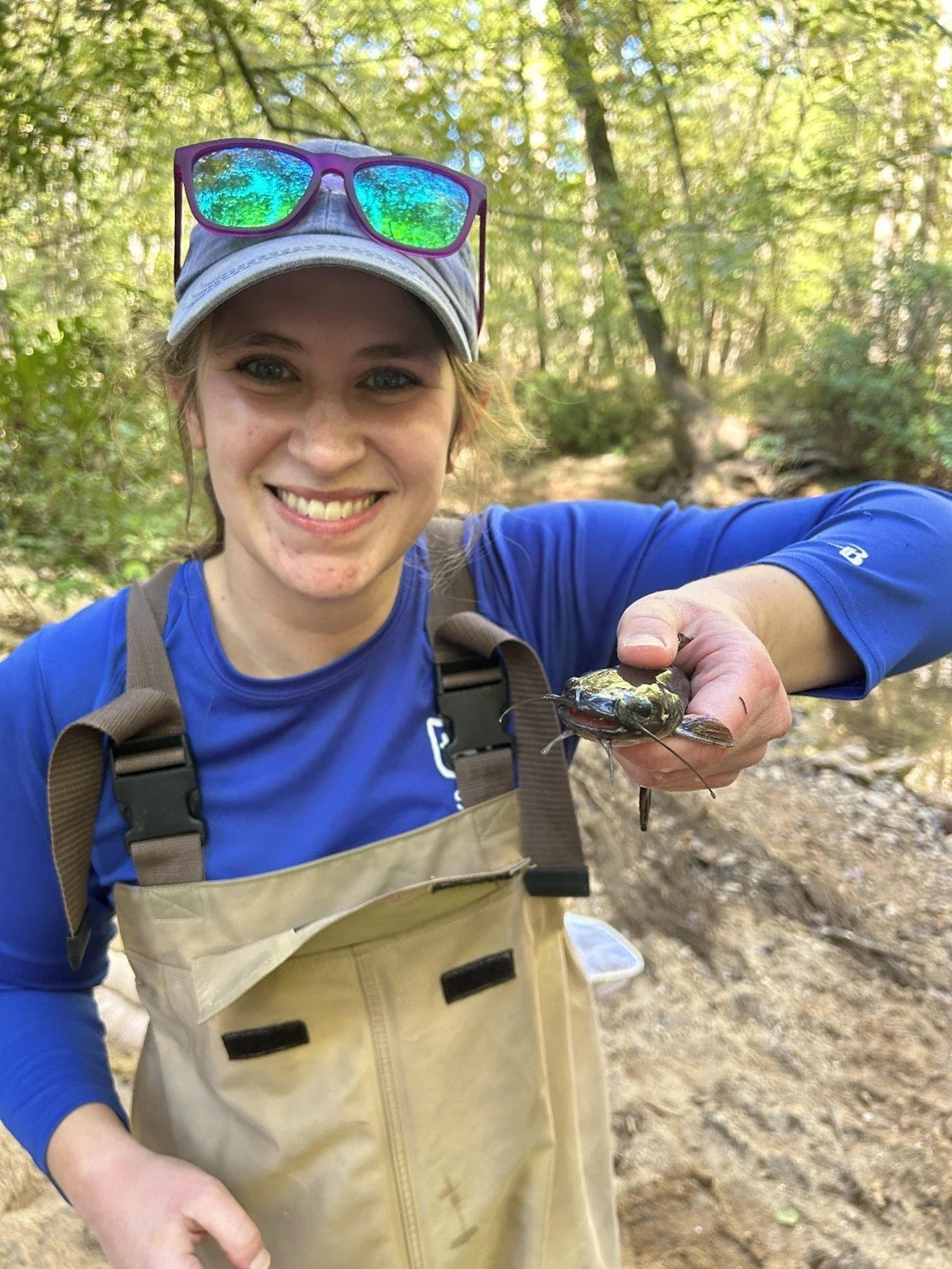
Lesley Twiner is currently working as the Northeast Arkansas Stream Habitat Coordinator for the Arkansas Game and Fish Commission where she works with private landowners to help restore impaired streams and improve habitat for aquatic organisms. She received her B.S. in Natural Resource Ecology and Management from Louisiana State University. After graduating from LSU, she went on to work with a variety of private, state, and federal agencies throughout the country as a field technician. She completed her master’s degree at Clemson University where her research was focused on the creation of novel methods to assess the impact of road stream crossings on AOP (Aquatic Organism Passage) and prioritizing watersheds for road-stream crossing assessment efforts.