
Response of Fish Populations and Pool Depths to Large Wood Habitat in Streams
Matt C. Kondratieff
Colorado Parks & Wildlife
Fort Collins, CO
Authors: Kondratieff, M. C., Fetherman, E. R., Swarr, T., Kiel, K., & Richer, E. E.
Low flow refugia and depth cover in the form of deep pools were identified as a limiting factor for adult Brown Trout Salmo trutta and Rainbow Trout Oncorhynchus mykiss populations in the Middle Fork of the South Platte River, Colorado. To address this limitation, a 2.1-mile habitat restoration project was initiated with the goal of converting degraded shallow, overwide pools into deeper, narrower pools to improve fish habitat. All constructed pools consisted of excavation of a deep pool and grading of a point bar. Three constructed pool types included: 1) no wood placement (non-wood), 2) large wood placed haphazardly at the bank toe of the outside bend (haphazard), and 3) large wood intentionally placed at the bank toe of the outside bend to function as an undercut bank (undercut). Control and reference pool sites, which were representative of the impaired pre-project conditions and the highest-quality local habitat conditions, respectively, were also evaluated. Monitoring of pool depths and fish populations occurred 8- and 10-years post-construction. Fish populations were surveyed using multi-pass depletion electrofishing techniques to estimate Brown Trout abundance (number), quality (number >14” TL), and biomass (lbs) standardized by pool length. In addition, the abundance and biomass of Rainbow Trout, White Sucker Catostomus commersonii, and total fish were estimated. Geomorphic variables expected to influence pool depths, fish abundance, and biomass were measured and analyzed, including wood quantity, pool type, pool length, bankfull width, and upstream riffle length. Additional variables expected to influence pool depths included radius of curvature and upstream riffle slope, whereas additional variables expected to influence fish biomass and abundance included undercut bank, pool depth, and year. Results demonstrated that large wood habitat increased residual pool depths and increased fish abundance and/or biomass for Brown Trout, Rainbow Trout, White Sucker, and total fish. No differences in pool depths or fish response were detected between haphazard and undercut toe wood construction techniques.
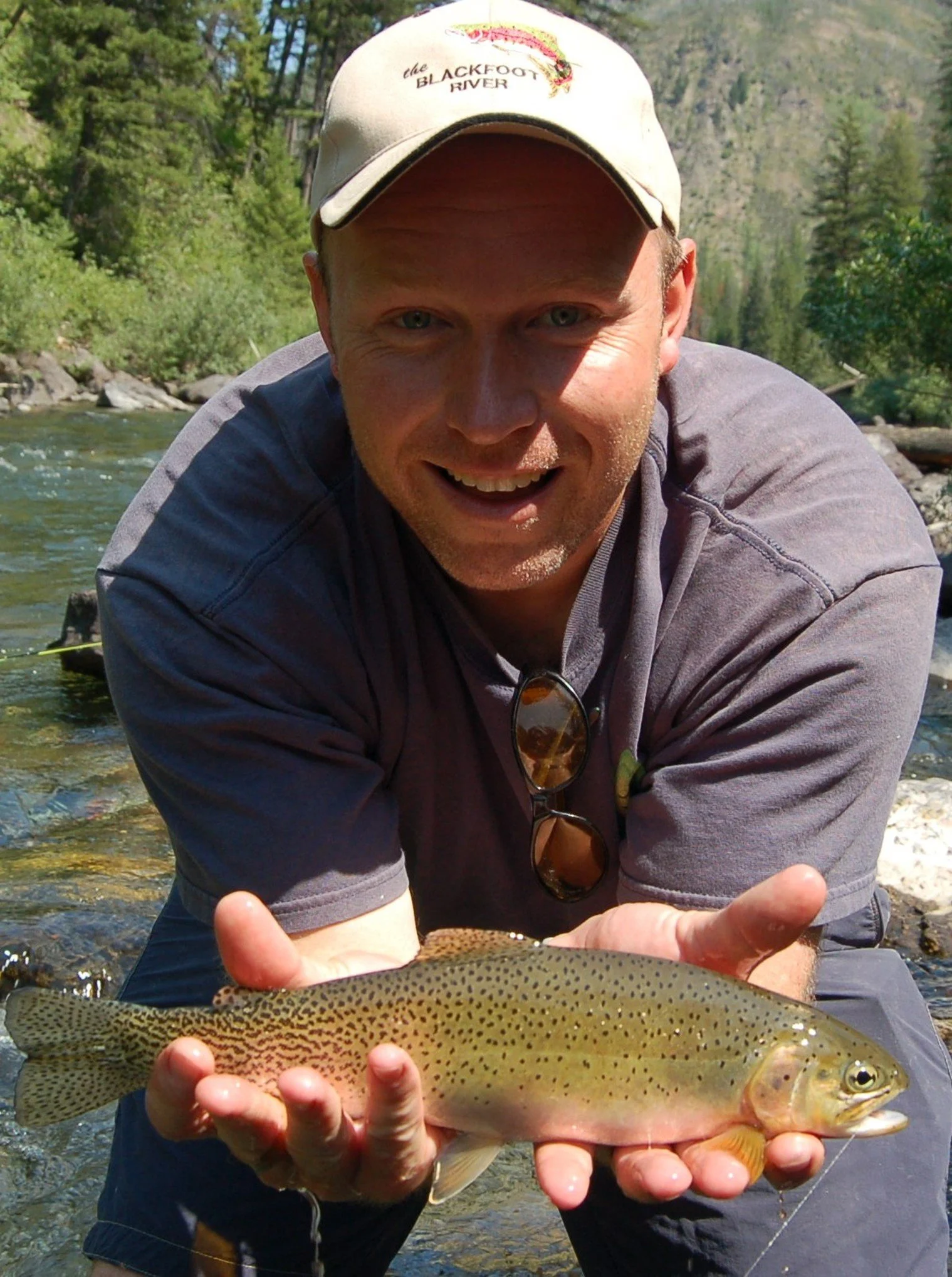
About Matt Kondratieff
Matt Kondratieff is an Aquatic Research Scientist for Colorado Parks and Wildlife in Fort Collins, CO U.S.A. He completed his undergraduate work in California at U.C. Davis, received his Master’s degree from Colorado State University and he worked for three years as a fisheries biologist for Wyoming Game and Fish in Pinedale, WY before moving back to Colorado. Matt has 19 years of experience conducting the assessment and monitoring of fish populations and habitat in rivers across Colorado. He also studies the barrier potential of river structures to fish including everything from whitewater parks to conservation barriers designed to protect native fish to technical fishways to water diversions and dams.