Novel Monitoring of a Dam Removal Site in Southeastern Virginia
Leah Purdy
RES
Richmond, Virginia
This case study details the novel post restoration monitoring plan, site development, and lessons learned after the removal of two farm pond dams in Suffolk, Virginia, as part of a Permitee Responsible Mitigation (PRM) project supporting stream and wetland restoration completed in December 2024.
Post restoration monitoring used a combination of aerial imagery, BANCS mapping, habitat and vegetation assessments, and stream gauges to measure site performance. The monitoring plan anticipates site evolution and allows for adaptive management strategies to ensure long term sustainability and restoration success. The plan tracked the unassisted early vegetation succession in the dewatered pond bottoms, which revegetated before the floodplain was dry enough to allow for active planting, and provided insight into the emergence of native and invasive species in the seed bank of the pond sediments. Concerns about sediment mobilization were integrated into the monitoring plan to ensure the preservation of a cypress swamp downstream of the dam removal site.
Lessons learned from Year 1 and Year 2 monitoring can be incorporated into future monitoring and management plans.
About Leah Purdy
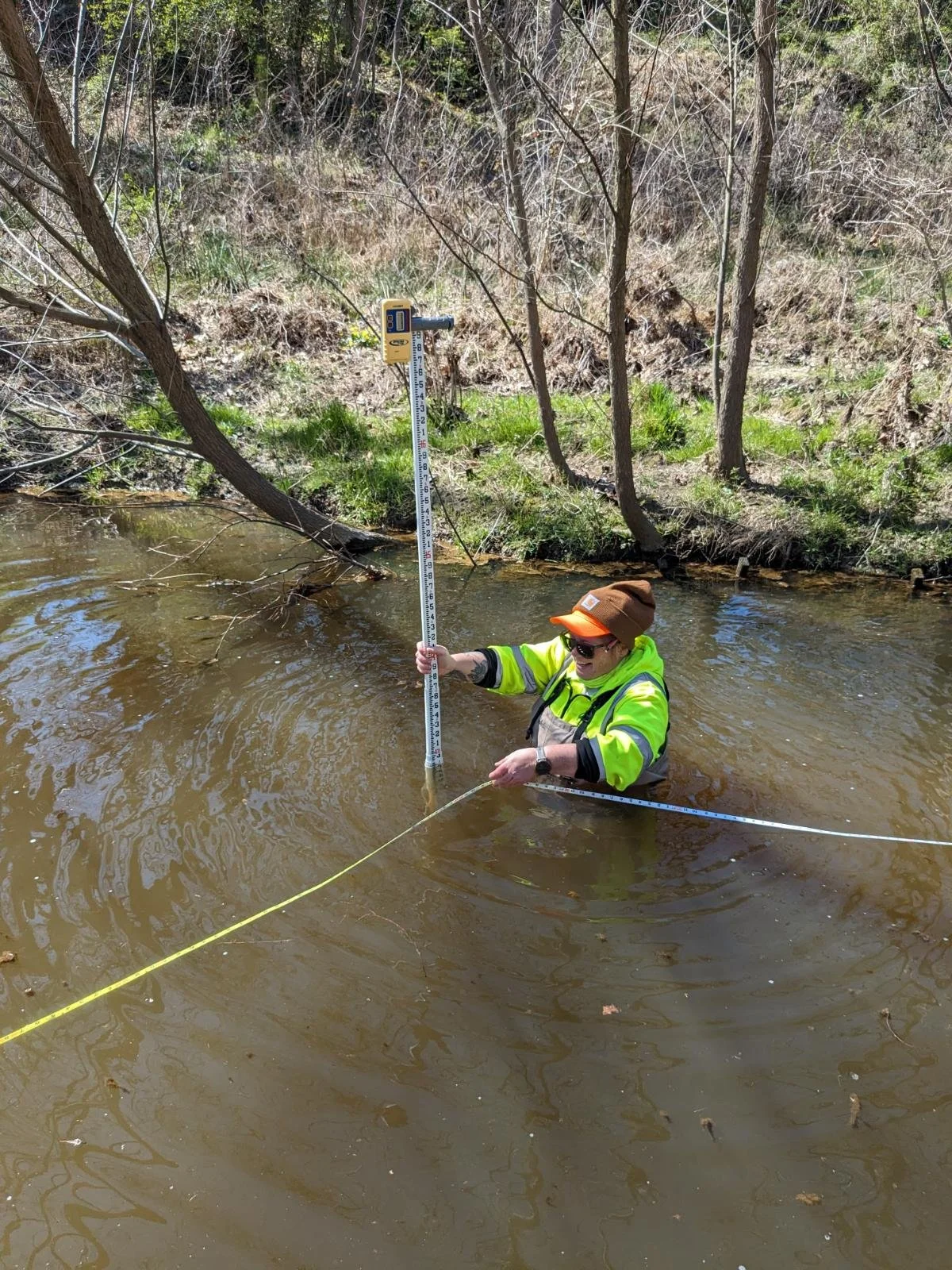
Leah Purdy is an ecologist specializing in stream restoration. She is passionate about insect conservation and has an extensive background in horticulture where she combined her love of insects and plants by focusing on insect habitat creation through garden plantings and maintenance practices. As a Stream Scientist at Resource Environmental Solutions, she leads and trains field teams in stream assessments, macroinvertebrate sampling, and monitoring efforts. She creates site planting plans focusing on creating resilient habitats that support insect species both inside the stream channel and within the floodplain. Leah actively educates the public on native insect conservation through lectures, outreach programs, and hands-on demonstrations, emphasizing the vital role of beneficial insects in ecosystem health. Her dedication to ecological restoration extends to volunteer efforts, where she has worked on invasive species removal projects and native replanting initiatives to enhance biodiversity and improve habitat resilience. Leah obtained a Bachelor of Science in Landscape Architecture at Temple University and a Master of Natural Resource Stewardship at Colorado State University.