Restoration That Resonates: Rethinking Public Engagement in Stream Projects
Brandon Alderman, CERP
AECOM
Roanoke, VA
AECOM’s extensive experience conducting public meetings across the Mid-Atlantic and Northeast, from South Carolina to Michigan, provides valuable insight into how different communities understand and respond to stream restoration projects. Technical teams often focus on geomorphology, hydrology, and regulatory requirements such as MS4 and TMDL crediting, while many residents may not be aware of watershed impairments, or the obligations localities must meet. This gap in understanding can lead to questions or concerns about the purpose and need for the project.
This presentation highlights common themes observed during public engagement, including requests for clearer explanations of project goals and how proposed actions address existing and potential future conditions. Community members often look for visible, meaningful benefits. Strengthening support can come in many ways such as incorporating recreation, public access, trails, eco-tourism opportunities, utility improvements, and added flood resilience. These co-benefits demonstrate how stream restoration can meet project goals while enhancing community quality of life.
Ultimately, successful stream restoration implementation depends not only on technical design but on clear communication, relatable messaging, and meaningful connections to community values. By focusing on transparency, shared benefits, and collaborative engagement, project teams can help residents better understand the purpose, context, and long-term advantages of restoration efforts.
About Brandon Alderman, CERP
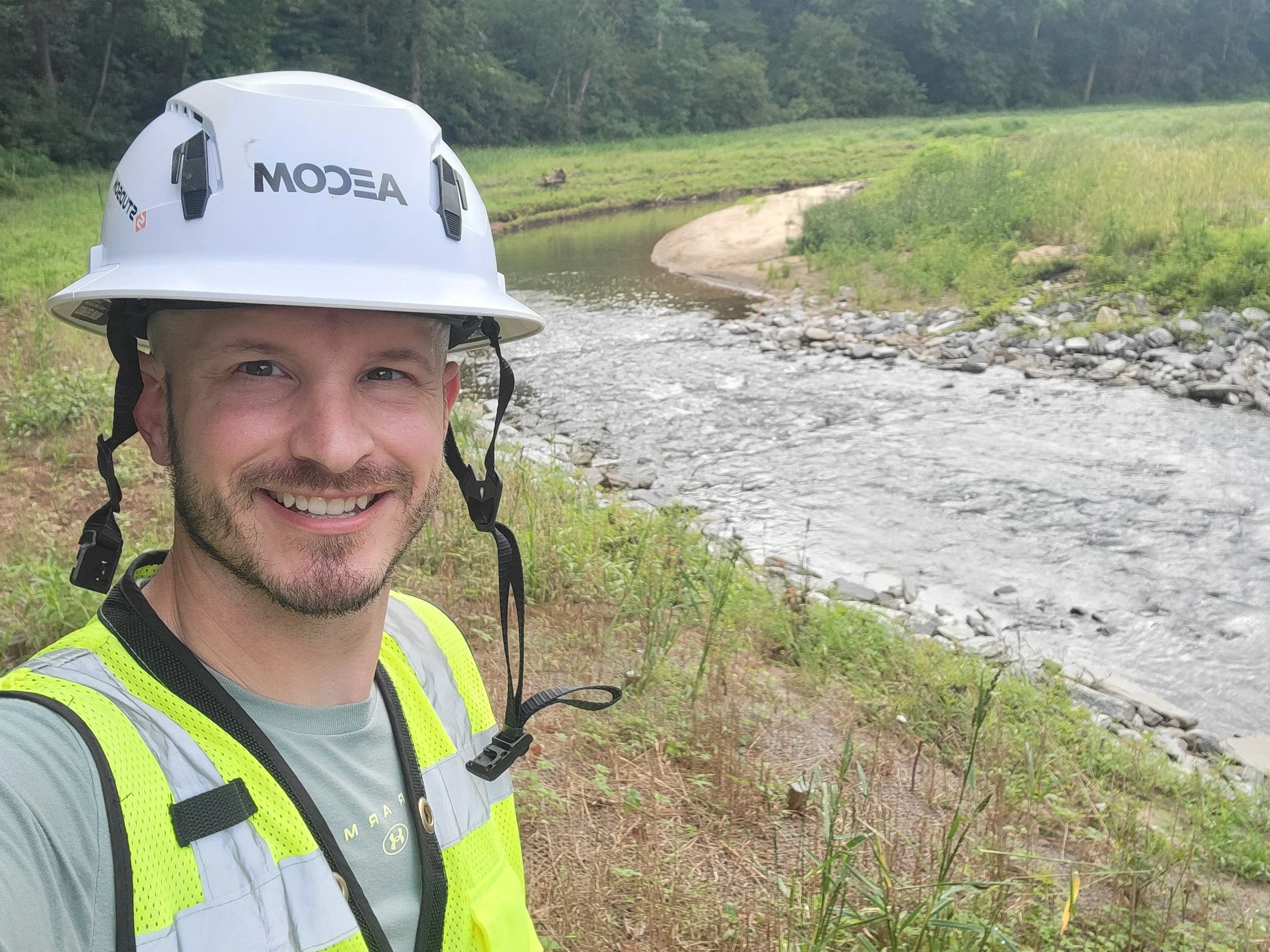
Mr. Alderman has over 18 years of expertise in designing, assessing, monitoring, and implementing a wide range of stream and wetland restoration projects aimed at ecological restoration. As the Senior Stream Restoration Designer for AECOM’s East region and AECOM's United States National Practice Lead for Stream Restoration, he spearheads initiatives in ecosystem restoration, stream bank stabilization, dam removal, outfall restoration, and mitigation banking. His work offsets unavoidable impacts to aquatic resources through innovative and sustainable solutions. Mr. Alderman has also overseen the construction and management of numerous stream and wetland restoration projects. With extensive training in natural stream channel design, including all four levels of Dave Rosgen’s courses, he has contributed to the design and construction of over 400,000 linear feet of stream restoration and the establishment of over 300 acres of wetlands across 16 states in the Eastern United States, Midwest, including international design.