Development of a Benthic Macroinvertebrate Multi-Metric Index for the Carolinas Piedmont - Implications for Stream Restoration Biological Uplift Assessments
Anthony J. Roux, PhD
Robert Sowah, PhD
Charlotte-Mecklenburg Storm Water Services
Charlotte, NC
Authors: Roux, Anthony J. PhD, Sowah, Robert, PhD
Stream restoration is a multi-billion-dollar industry that restores streams to a more natural condition while stabilizing their geomorphology. Questions have risen regarding evaluating the biological uplift due to the complex work restoring degraded streams. Benthic macroinvertebrates are commonly used to assess stream health and instream habitat quality. Charlotte-Mecklenburg Storm Water Services (CMSWS) has been conducting benthic macroinvertebrate assessments since 1994 using the Standard Qualitative Method developed by North Carolina Department of Environmental Quality (NCDEQ). Data analysis of this method focuses on taxa pollution tolerance values and relative abundances (NC Biotic Index). This analysis approach leaves an enormous amount of information contained in the taxa traits untapped. Multi-Metric Indices (MMI), which include trait groups such as taxa richness, trophic structure, pollution tolerance, and habits, have been developed for a large percentage of Federal and State environmental agencies as well as several municipalities.
CMSWS is developing an MMI for the Piedmont of the Carolinas using qualitative benthic data collected by both CMSWS and the South Carolina Department of Health and Environmental Control (SCDHEC). The presentation will go through the development process steps, including selecting the metrics to test, assigning candidate metrics to life history categories, calculating the metrics, and evaluating the metrics' ability to distinguish between reference and stressed sites. The best metrics will be selected for the final MMI, which will then be evaluated for its efficiency in distinguishing between reference and stressed streams.
The Carolinas Piedmont MMI will be used to evaluate the biological uplift that can be attributed to stream restoration projects built in Mecklenburg County’s urban streams such as Little Sugar Creek. The current evaluation process included EPT taxa richness and NCBI scores. Prior to restoration, 3 or 4 EPT taxa were found at each site. A total of 12 different EPT taxa were found throughout the stream. After the restorations, 8 to 12 EPT taxa were found at each site. No new taxa were found. Hopefully, the MMI can confirm if this is evidence of biological uplift.
About Anthony J. Roux, PhD
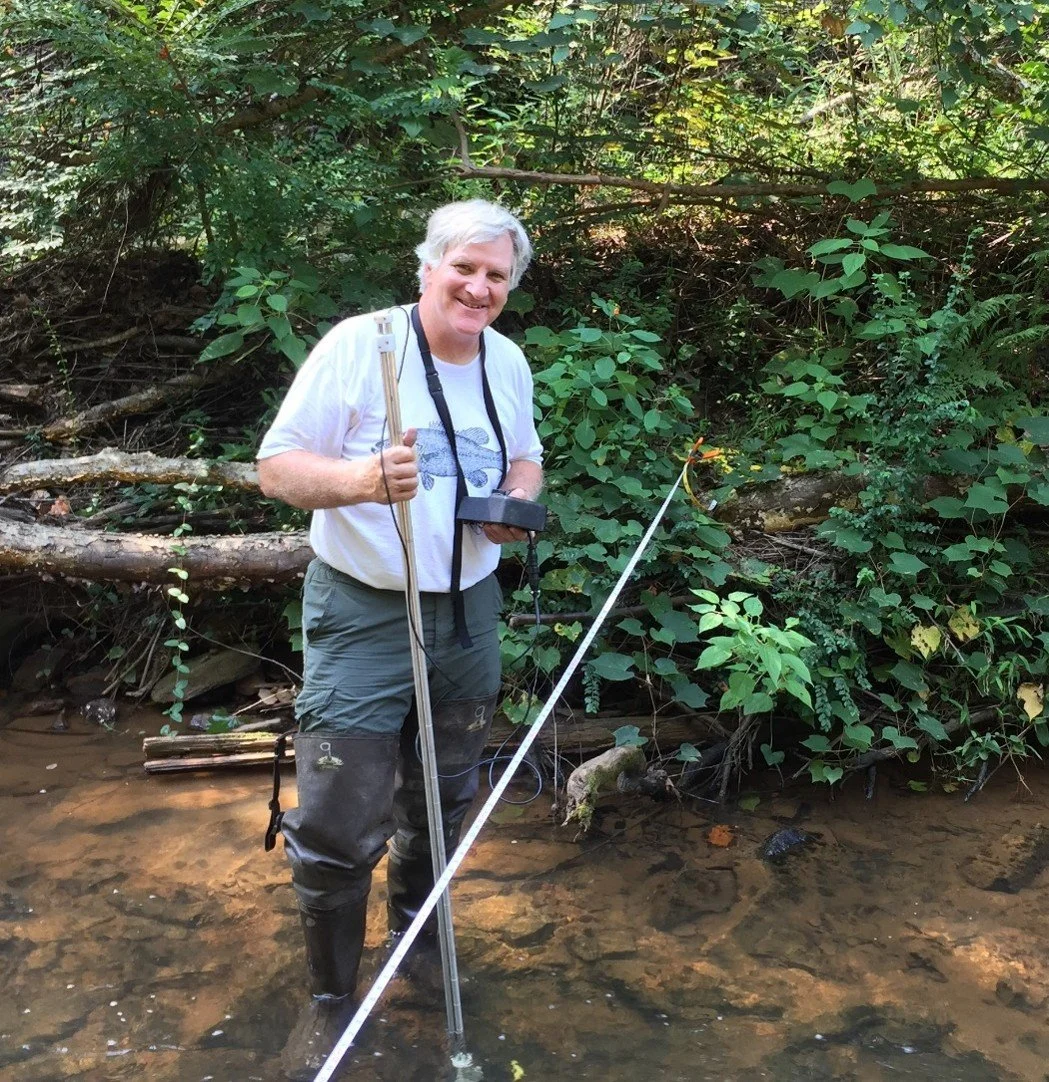
Anthony Roux is an Environmental Specialist IV in the Water Quality Program of the Charlotte-Mecklenburg Storm Water Services. He has worked at CMSWS for 41 years and has supervised the Mecklenburg County State Certified Biological Laboratory for the past 32 years coordinating the stream bioassessment program (fish, benthic macroinvertebrates, and algae). Mr. Roux has worked with the Charlotte-Mecklenburg Storm Water Services to evaluate the various stream restoration projects in Charlotte and Mecklenburg County. He earned a Ph.D. in Infrastructure and Environmental Systems at UNC Charlotte studying the impact of urbanization on stream biodiversity and ecosystem function. He has a B.S. in Biological Life Sciences, a B.S. in Zoology, and a M.S. in Zoology from North Carolina State University and a M.S. in Aquatic Ecology from the University of Notre Dame. He is a certified taxonomist for Eastern Mayflies, Stoneflies, Caddisflies through the Society for Freshwater Science.

About Robert Sowah, PhD
Coming Soon