Caught in the Confluence: Hydraulic 1D Modeling Challenges in Peter’s Creek Floodplain Mitigation Project
Rebecca Stubbs, PE
McAdams
Raleigh, NC
Curry McWilliams, CFM, ENV SP
Roanoke, VA
The Peter’s Creek Floodplain Mitigation and Constructed Wetland Project in Roanoke, Virginia presents a unique combination of restoration, flood mitigation, and FEMA permitting challenges. The project site is situated at the confluence of two FEMA‑regulated systems: Peter’s Creek and Peter’s Creek Tributary C. The primary project goal is to reduce flooding for adjacent neighborhoods through extensive floodplain benching, overbank wetland construction, and channel stabilization while also integrating stormwater BMPs to improve water quality. However, implementing substantial geometric revisions within a hydraulically complex confluence presented modeling challenges to demonstrate project benefit and achieve regulatory compliance.
FEMA currently requires independent one‑dimensional (1D) analyses for each mapped stream, the design team was tasked with representing a highly interactive floodplain system—where flows routinely exchange across the confluence—within two separate 1D HEC‑RAS models. This constraint introduced challenges in capturing realistic floodplain storage, maintaining hydraulic consistency at the downstream tie-in, and resolving instabilities triggered by major design changes such as channel realignment, bench excavation, in‑stream grade control installation, and sanitary sewer protection measures.
Initial No‑Rise modeling attempts revealed competing flood impacts between the two systems; reductions achieved in Peter’s Creek were offset by localized increases in Peters Creek Tributary C, and vice versa. The confluence geometry amplified model sensitivity, resulting in instability, poor convergence, and unrealistic water surface transitions. Through iterative refinement—including strategic cross section placement, simplification of confluence geometry, and coordinated calibration between the two models—the project team developed a stable dual‑model approach capable of consistently representing the proposed restoration layout.
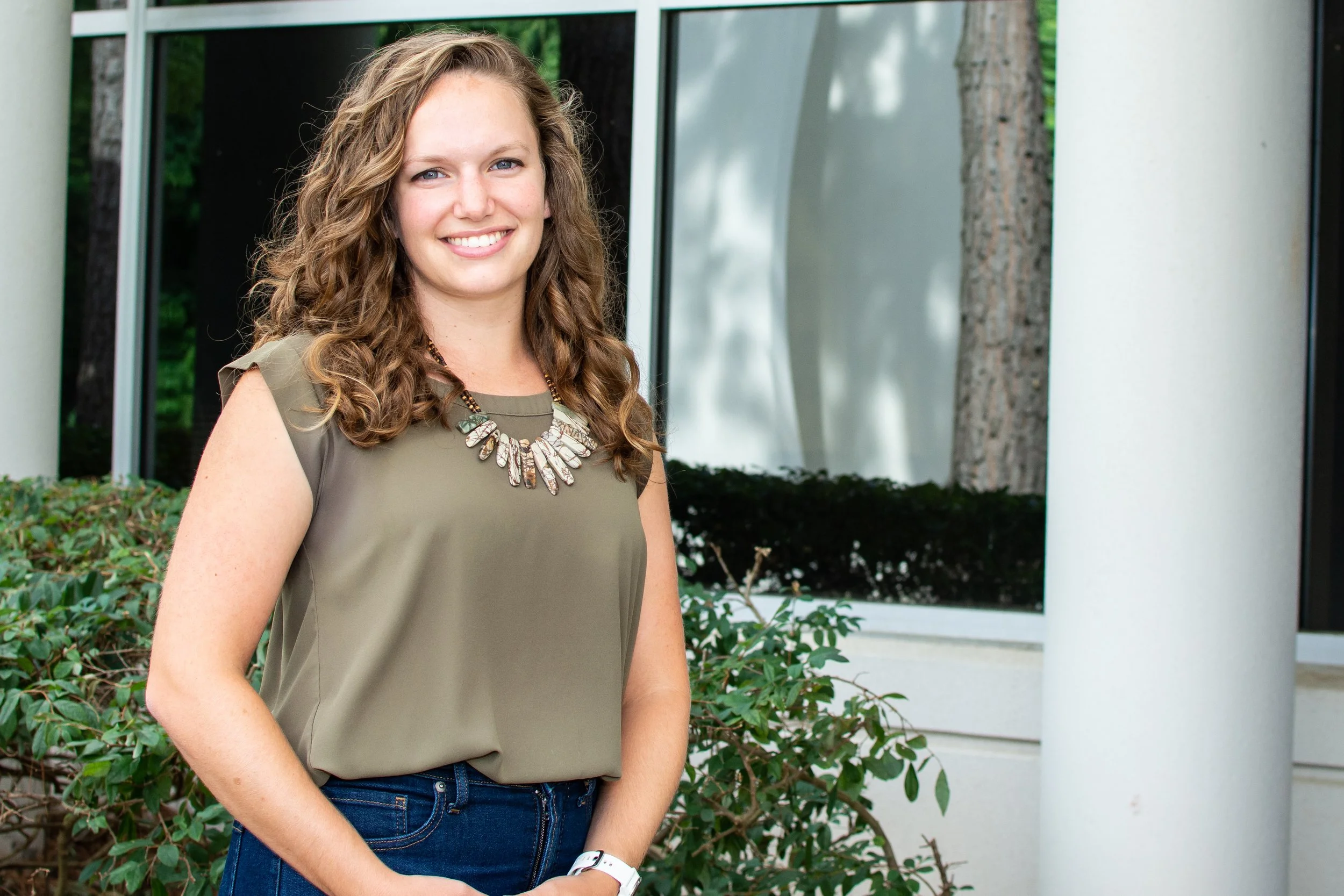
About Rebecca Stubbs, PE
Rebecca is a graduate from NC State University's Biological and Agricultural Engineering department and has been with McAdams since 2015. She has intentionally focused her career on nature-inspired solutions to address and improve the quality of the surface waters we all depend upon. With a background in land development stormwater, she has a deep understanding of the impacts urban runoff has on streams and wetlands. Over the last 6 years she has built the Stream Restoration Practice at McAdams, managing stream and wetland projects from concept design through construction. She and her team serve a variety of municipal clients, mitigation bankers, private entities, and non-profit organizations across the Southeast to develop restoration designs that will provide mitigation credits, uplift degraded ecological communities, and protect infrastructure investments while enhancing natural features of the project sites
About Curry McWilliams, CFM, ENV SP
Curry is a graduate from Kansas State University's Biological and Agricultural Engineering department. He started his career with the City of Roanoke's Stormwater Division where he spent 7 years managing the City's stream restoration and flood mitigation programs and capital projects. During his time with the City, he found a passion for delivering projects to benefit community resilience. His proudest achievements include managing Virginia's first in-house restoration utilizing DEQ's Stormwater Local Assistance Fund, and being awarded Virginia's Flood Mitigation Project of the Year for the management of the Lick Run Flood Mitigation project. Curry is currently seeking his next opportunity to serve his local watersheds, to deliver great projects, using good data, while empowering his team and partners to find creative solutions to build a more resilient community for the future.